Goal: This guide explains the specific value drivers—from master-planned amenities to location and quality homebuilding—that contribute to the long-term appreciation of Daybreak homes.
Quick Answer: Daybreak homes are designed for long-term value, with appreciation driven by the stability of a master-planned community, high-quality construction, and continuous investment in amenities, infrastructure, and lifestyle offerings.
- Location and Transit: Proximity to Salt Lake City, TRAX access, and strong commuter connectivity fuel long-term demand.
- Amenities: Access to Oquirrh Lake, parks, trails, and community spaces creates a strong desirability advantage.
How do Daybreak homes build value over time?
Daybreak homes appreciate because they exist in a master-planned environment designed to help maintain long-term desirability.
- Master-planned stability keeps neighborhoods consistent and high-quality.
- Amenities and transit access increase lifestyle value and buyer demand.
- Community growth and economic strength enhance long-term appreciation.

At-a-Glance Home Value Metrics
| Category | Metric | Source & Month |
|---|---|---|
| Home Value Appreciation | Salt Lake County YoY: +4.1% | Utah Association of Realtors, as of Q3 2024 |
| Median Home Value (South Jordan) | $720,000 | MLS, as of May 2025 |
| Average Price per Sq. Ft. (Daybreak) | $245 | MLS, as of May 2025 |
| Key Amenities | TRAX, Oquirrh Lake, 50+ parks | Developer Data, as of May 2025 |
| School District Ranking | 8/10 | Utah School Report Card, as of 2024 |
What Makes Daybreak Homes Hold Their Value?
Daybreak stands apart because its master plan eliminates many of the variables that cause value instability in other communities. Architectural consistency, community governance, and cohesive long-term planning ensure the environment remains attractive well into the future.
For a deeper look at the community structure, explore the Daybreak Real Estate Overview.
The Power of Master Planning
Design Guidelines that Support Appreciation
Daybreak enforces design guidelines that ensure neighborhoods remain visually cohesive over time. Because architectural standards stay consistent, the risk of rapid visual deterioration—common in less-regulated developments—drops significantly.
Neighborhood Connectivity: Trails, Parks & Walkability
With more than 50 parks, integrated trails, and pedestrian-friendly design, Daybreak supports a lifestyle anchored in walkability. These design choices increase long-term demand and reduce transportation burdens. Because of this, Daybreak continues to attract buyers who value convenience and community.
Amenity-Rich Living Drives Demand
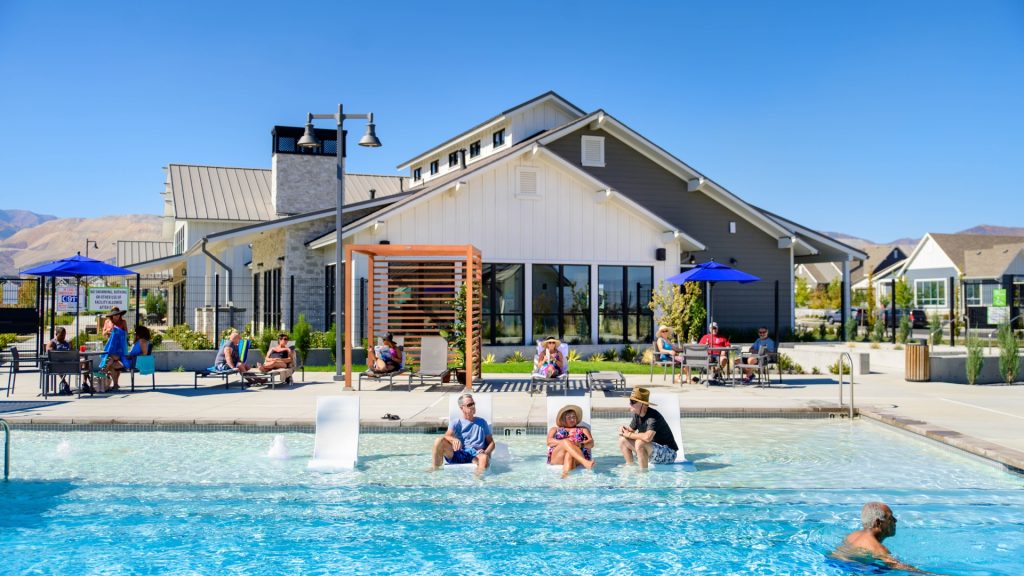
Amenities play a major role in Daybreak’s value growth. Oquirrh Lake, community pools, sports courts, and open spaces create a lifestyle unmatched in most suburban areas. These features substantially raise the desirability of Daybreak homes.
- Explore Daybreak Amenities to see the full offering.
- Learn more about Oquirrh Lake, a cornerstone of Daybreak’s outdoor living experience.
A Strong and Growing Market in South Jordan
South Jordan consistently ranks as one of Utah’s strongest housing markets thanks to economic stability, high household incomes, and top-performing schools. As of the Utah Economic Report to the Governor 2025, Salt Lake County employment grew 2.3% year-over-year, signaling continued regional demand.
Furthermore, South Jordan’s median household income—$112,000 as of 2024 (U.S. Census Bureau)—exceeds both Utah and national averages, enhancing buyer purchasing power and market stability.
Downtown Daybreak also enhances long-term value by supplying retail, office, and entertainment space within walking distance. Explore the development at Downtown Daybreak.
Why Buyers Stay in Daybreak

Homeowners choose to remain in Daybreak because the community delivers more than housing—it delivers lifestyle. Neighborhood events, connected parks, cultural programming, trails, and lake access create a level of convenience and charm that retains residents long-term.
To explore available options, browse Daybreak Villages & Districts.
Real-World View: A Daybreak Home’s Value Trajectory
Consider this hypothetical scenario: A Daybreak home purchased in 2015 for $360,000 could be worth approximately $575,000–$620,000 today, depending on upgrades, lot location, and proximity to amenities (MLS, as of May 2025). While appreciation varies, Daybreak’s master-planned consistency helps reduce volatility.
FAQ
What is the average appreciation rate for Daybreak homes?
Appreciation typically aligns with or slightly exceeds the Salt Lake County average. As of Q3 2024, the county experienced +4.1% year over year (Utah Association of Realtors). Daybreak may perform differently based on proximity to amenities and neighborhood age.
How does the HOA fee add to a home’s value?
The HOA funds parks, lakes, trails, snow removal, and maintenance that support long-term community desirability. This investment helps maintain visual appeal and structural integrity, which contribute directly to value stability.
Is a Daybreak home a good long-term investment?
Yes—Daybreak’s planned growth, amenity portfolio, and consistent market demand create strong conditions for long-term investment performance. As always, individual appreciation varies by neighborhood, home type, and market cycles.
How does the master plan affect market stability?
The master plan minimizes risk by preventing unpredictable development. Unlike traditional subdivisions, Daybreak maintains architectural guidelines, open space requirements, and cohesive design planning that preserve long-term value.
Next Steps
If you’re ready to begin your Daybreak journey, explore Daybreak Homes for Sale, tour model homes, or connect with a financial partner at Visit Daybreak.
Author
Written by: Connor Anderson
Last updated: December 2025
Sources: MLS Data (May 2025), Utah Association of Realtors (Q3 2024), U.S. Census Bureau (2024), Utah Economic Report to the Governor (2025)
*We love sharing tips, but this isn’t a substitute for expert guidance. Always connect with a qualified real‑estate pro for personalized advice.
*We love sharing tips, but this isn't a substitute for expert guidance. Always connect with a qualified real-estate pro for personalized advice.


